

OMAKASEBOX

Welcome. This is the beginning of your journey at OmakaseBox Club

松花堂弁当 | Shōkadō bentō

Before exploring your box, allow yourself to know the Shokadō Bentō Kit that accompanies each edition.
Your kit consists of:
-
Hashi (Japanese chopsticks)
-
Hashioki - Support for chopsticks
-
A compact towel for hand cleaning
-
A small kit of selected teas
-
The furoshiki fabric, used to wrap the box
This Shokadō Bentō was born from the care and aesthetics of Kaiseki - where every detail carries: Intention, each ingredient honors the season, and each flavor invites quietness..
冬 | WINTER


The Ritual of Your Shōkadō bentō
Every detail of your Shokadō Kit was designed to awaken the senses and value the simplicity of the moment.
Follow these guidelines to fully enjoy your meal.
-
Hashioki: The support keeps the chopsticks high - a simple detail that preserves the harmony of the service. This is the fugu fish, which came straight from Arita/Japan.
-
Compact towel: Put a few drops of hot water on the tablet.It will expand and turn into a small oshibori, a Japanese gesture of welcome to warm and purify your hands in winter.
-
Furoshiki wraps the box with respect. Store it after unwrapping - it should not be washed or used as a towel.
-
Oni (Demon) represents everything that is negative and should be expelled before the arrival of spring.


The Season's Toast

Setsubun is a traditional Japanese event that symbolically marks the arrival of spring!
During Setsubun, it is customary in Japan to eat roasted soybeans as a symbolic ritual.
The beans represent protection and purification — they are believed to drive away bad luck and bring health for the new year.
Curiosity: Traditionally, people eat one bean for each year of their age, as a wish for good fortune and longevity. It is a cultural way to “welcome spring with positive energy.”
Click here for more information
MENU

We will guide you through each item of your Shokadō Bentō, revealing care, uses and small stories behind every detail.
History of Shōkadō bentō - Part III - Legacy
Today, the Shokadō Bento is an icon of refined Japanese cuisine.
It is a way of presenting dishes with delicacy, seasonality, and intention, preserving the spirit of Kaiseki.
A box that, when opened, reveals not just food — but a way of seeing the world.
Kobachi
- Karashi Renkon is a Kumamoto specialty consisting of lotus root stuffed with Japanese mustard and miso, traditionally enjoyed during January winter festivals.

MENU

Shiro Gohan
- It is the heart of Shokadō Bentō, offering neutrality and balance for each accompaniment.
Kuri gohan, a seasonal dish that celebrates the harvest and provides comfort during the cold months.
The chestnuts symbolize abundance and add a naturally sweet and nutritious flavor, perfect for the season.
MENU
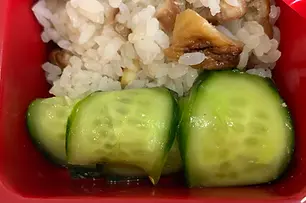
Tsukemono
- Preserve present for centuries in Japan, integrates the Shokadō Bentō for its ability to clean, refresh and harmonize the palate.
Cucumber pickles with miso — crisp cucumbers marinated in miso paste, offering a salty, umami, and refreshing flavor, typical of Japanese cuisine.
MENU

MUKOZUKE
- In kaiseki, the mukōzuke features a fresh and refined preparation—traditionally sashimi—introducing purity and delicacy to the meal.
- Sashimi I
Bluefin tuna accompanied by sole fish with yuzu koshou, served with daikon tsuma and real wasabi - a mukōzuke that celebrates the freshness and stillness of the sea.
Nikiri Shōyu: This is the Shokadō Bento’s special soy sauce, gently prepared to enhance the flavours. Use sparingly and keep refrigerated for your next Shokadō.

MENU
AGEMONO
- Tempura is a dish introduced to Japan in the 16th century by Portuguese traders, in which seafood and vegetables are lightly battered and fried, and over time the Japanese developed their own unique style.
The dish consists of: eggplant, string beans, shrimp and special sauce.

MENU
YAKIMONO
- In Shokadō Bentō, yakimono represents the grilled element, bringing intense flavor, warmth and delicate texture that contrast with the other softer dishes.
Unagi Kabayaki (grilled eel), although traditionally associated with summer for its symbolism of energy and stamina, can be enjoyed in winter as an expression of the versatility and timeless flavor of Japanese cuisine.

MENU
NIMONO
- Nimono is the cooked dish that preserves the color, texture and flavor of the vegetables, symbolising balance and care in the meal.
The dish consists of: bamboo shoot, pumpkin, broccoli and red radish.

MENU
DEZAATO
- Wagashi, are traditional Japanese sweets, delicate and deeply tied to the seasons. Crafted from beans, rice, or fruit, they subtly transform in shape and color as the year passes, turning each sweet into a tiny, edible work of art.
In the Japanese winter, wagashi serve more as a form of emotional warmth than physical warmth — something comforting, quiet, and steady.
Hōjicha jelly — a light jelly made from roasted green tea, with warm, toasty aromas, perfect for winter.
Small pieces of Rocha pear add freshness and sweetness, harmonizing beautifully with the deep flavor of the tea.